

9 min read
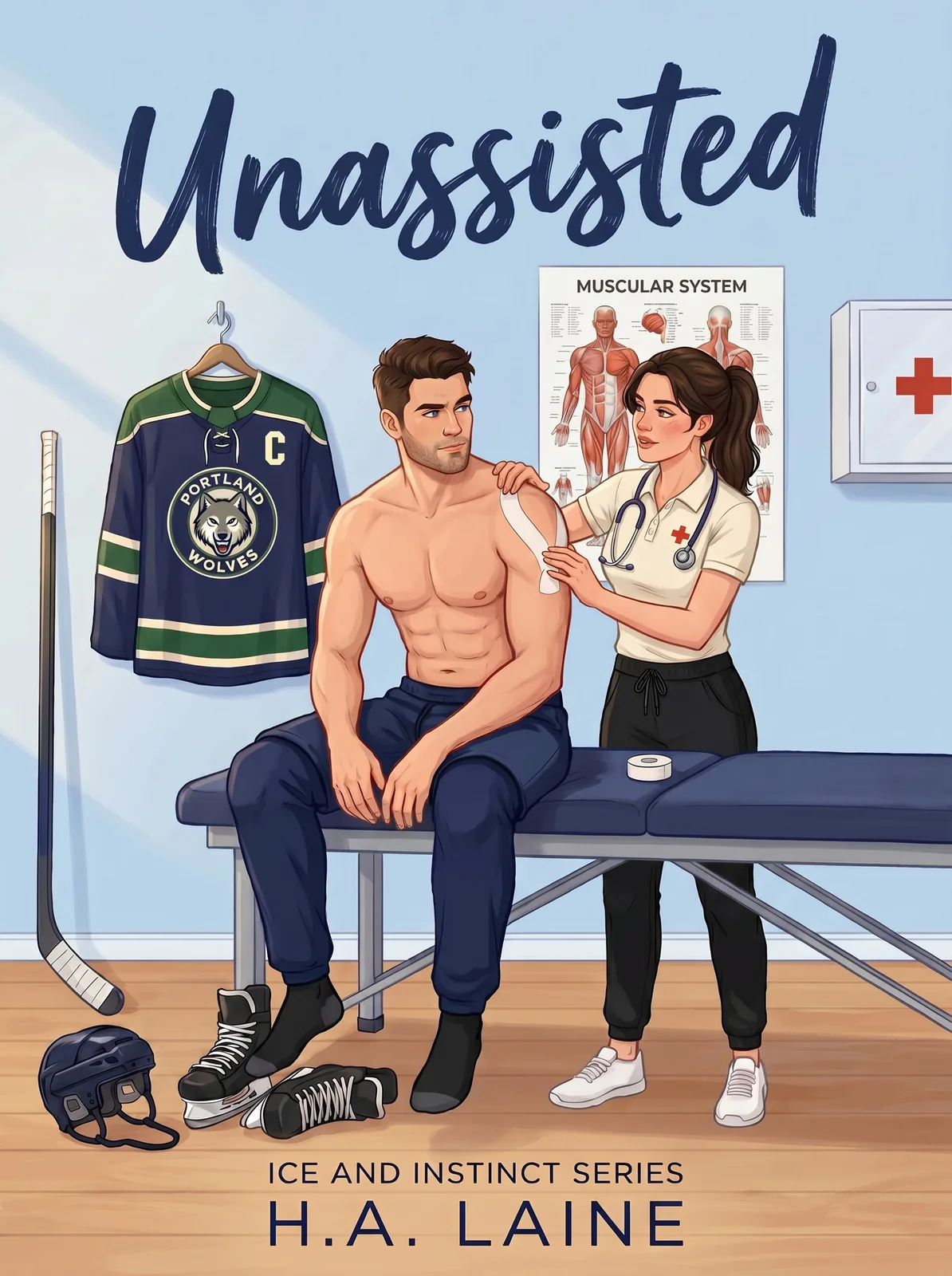
Behind Unassisted: Why Shoulder Rehab Became the Love Story
Behind Unassisted, see why shoulder rehab, clinical precision, and forbidden care make Declan and Elena's hockey romance work.
Quick Answer
Why The Rehab Matters
Unassisted works because shoulder rehab makes Declan and Elena honest before either of them can be romantic. The injury turns care into proximity, clinical precision into trust, and every professional touch into pressure the book has to earn.
Best quick picks
- Start hereUnassisted
- Read nextBetween the Glass
- Full pathIce and Instinct reading order
Unassisted turns shoulder rehab into romantic pressure, not medical decoration.
Declan's control and Elena's precision make care feel dangerous before it feels safe.
Every training-room touch has a reason before it has a confession.
Book 1 is the cleanest doorway into the Portland Wolves and Ice and Instinct.
Unassisted works because shoulder rehab forces Declan and Elena into the one kind of honesty neither of them can control.
Declan can choose his words. Elena can keep her voice clinical. But the shoulder tells the truth first: where he compensates, where he protects, where he is not as fine as the captain's face wants everyone to believe. That is the doorway into their romance.
If you want a hockey romance where touch has a reason before it has a confession, this is the Book 1 entry point into Ice and Instinct.
Is This Your Kind Of Hockey Romance?
Unassisted is for readers who want care under pressure, forbidden proximity, guarded leads, and a slow burn built from clinical precision. It is not a light rink-flirt book. The heat comes from restraint first.
You can use this as your early fit check:
- You like hockey romance where injury changes the emotional stakes.
- You want professional boundaries to matter before the romance crosses them.
- You prefer guarded adults who reveal themselves through behavior, not speeches.
- You like the ache of someone being known accurately before they feel safe being wanted.
The training room is not scenery. It is the place where a man who has spent years being useful has to let someone see where he is damaged, and the woman seeing it refuses to make that softer than it is.
What Is the Emotional Core of Unassisted?
The emotional core of Unassisted is the collision between Declan's control and Elena's precision. Declan protects people by becoming steady enough to lean on. Elena protects people by naming exactly what is happening, even when the truth is uncomfortable.
That sounds compatible until you put them in the same room.
Declan is used to being read as strong, controlled, and contained. Elena is trained to read past presentation. She notices compensation patterns, guarded movement, and the tiny evasions a body makes before the mouth invents a cleaner story.
That is why their attraction does not feel casual to me. It is not only that they want each other. It is that Elena sees the part of Declan his entire leadership style is built to hide, and Declan begins to understand that her precision is not coldness. It is care with the lights on.
Why Does the Shoulder Injury Matter Beyond the Plot?
Declan's shoulder injury matters because it attacks the identity he trusts most: the captain who can absorb impact and keep moving. A generic injury would create drama. This injury creates repeated care, measured progress, and a body that refuses to cooperate with his self-control.
Scene Pressure
Why The Training Room Works
The room works because care, boundary, and attraction all have a job before anyone names the feeling.
Injury Care
Declan's body stops obeying the captain's control.
Clinical Precision
Elena reads the injury without performing softness.
Professional Boundary
Every touch has a reason before desire can touch it.
Private Language
Rehab words start carrying feelings neither will say plainly.
The shoulder gives Elena legitimate access to what Declan hides. She is not prying. She is doing her job. That matters because the romance starts inside a boundary both people respect.
Every rehab session asks him to accept evidence. Range of motion. Instability. Pain he would prefer to route around. Elena does not flatter the injury and does not flatter him. She gives him the truth in a voice clean enough that he cannot dismiss it as pity.
That is the first intimacy.
What Readers Should Notice In Unassisted
Use this as a reader lens, not homework. The emotional pressure is in the way ordinary treatment details begin carrying more than treatment.
| What appears on the page | What it means emotionally |
|---|---|
| Declan's shoulder has to be assessed, treated, and retested. | His body stops letting him perform invulnerability. |
| Elena names what she sees instead of soothing what he wants hidden. | Her accuracy becomes care because she refuses to flatter the injury or the man. |
| Every touch has a medical reason before it has a romantic charge. | The forbidden line matters because the care is real before desire is safe to admit. |
| Progress happens in small sessions, not one dramatic breakthrough. | Trust grows because they keep showing up to the same room with less armor each time. |
| Rehab vocabulary starts carrying feelings neither of them will say directly. | The Translation Game lets restraint become intimacy without breaking character. |
| Declan's old trust wound surfaces through hesitation and control. | The romance asks whether being read correctly can feel like safety instead of exposure. |
| Ben, the Wolves, and team pressure exist at the edges. | Book 1 gives a complete romance while opening the emotional logic of the full series. |
What Makes Declan Rourke Different From A Generic Brooding Hero?
Declan is not distant because the book needs a moody hero. He is distant because distance has worked for him. That is the difference I care about.
A generic brooding hero has walls waiting to be knocked down. Declan has a system. He became reliable enough that other people could lean on him, then quietly removed the possibility of leaning back. That strategy made him a better captain. It also made him lonelier than he is willing to admit.
What Elena disrupts is not a bad attitude. Declan is respectful, disciplined, and often more careful with other people than he is with himself. She disrupts the belief underneath it: that if he stays controlled enough, no one has to see the cost.
The injury ruins that arrangement. It makes control visible as effort.
Reader lens: Declan is not waiting to be softened. He is waiting for someone who can see the damage without treating it like a flaw.
Why Is The Training Room More Than Forced Proximity?
The training room works because proximity has a job. Elena and Declan are not simply placed close together until feelings happen. The room gives every moment a reason: treatment, assessment, resistance, progress, pain, and boundaries.
That reason is what keeps the intimacy sharp.
Elena can touch him because the work requires it. Declan can let her because the work requires it. Neither of them has to name the charge at first, which makes the charge more dangerous. The professional frame protects them and exposes them at the same time.
That is the version of forced proximity I trust most as a reader. Not proximity as convenience. Proximity as evidence.
How Does The Translation Game Start In This Book?
The Translation Game begins when professional language starts carrying emotional truth. Declan and Elena are not built for easy confession, so the body gives them a safer vocabulary.
A clinical phrase can mean the joint is improving. It can also mean I see the effort you are pretending not to make. A pressure cue can mean protect the shoulder. It can also mean I know where you stop letting people in.
That private shift is one reason The Translation Game became a series pattern. Each Ice and Instinct book has a different professional language, but the emotional move is similar: the words begin practical, then slowly become intimate because the couple has taught you how to hear them.
In Unassisted, the first language is care.
Why Is Elena's Clinical Precision A Kind Of Vulnerability?
Elena's precision is not coldness. It is the safest way she knows to care. She measures because measurement means she is paying attention. She documents because the truth deserves to be handled cleanly. She does not soften the facts because softening them would be less honest.
That makes her easy to misread from the outside. Some people expect warmth to look warmer. Elena's warmth often looks like accuracy: the right adjustment, the exact observation, the refusal to let a player talk his way around pain.
With Declan, that precision becomes risky because she starts noticing more than the injury. Not in a melodramatic way. In the small, accumulating way that changes a room. The angle of his silence. The moment he stops performing fine. The tiny delay before he answers when the truth would cost him something.
For Elena, noticing is not passive. Noticing is involvement.
Why Does The Betrayal Arc Work?
Declan's betrayal wound works because it explains behavior without excusing distance. The old trust damage does not arrive as a single dramatic reveal. It sits under the way he manages pain, leadership, and dependence.
That is closer to how scar tissue behaves as you read. You do not always see it until pressure lands in the exact place.
Elena presses that place by accident because her questions are clinical. She is not trying to pull a confession from him. She is trying to understand the pattern in front of her. That makes his eventual honesty feel more earned. He is not rewarded for a grand speech. He lets one precise truth out because she has already proven she can hold precision without turning it into judgment.
That is the tenderness of the book for me: not softness replacing truth, but truth finally feeling safe enough to stay in the room.
What Reading Unassisted Feels Like
Reading Unassisted should feel like watching restraint become a language. The pacing is not built around one huge breakthrough. It is built around accumulation: the same room, the same shoulder, the same professional line, and two people becoming more aware of what that line is protecting.
The book has heat, but the heat works because the care comes first. The touch is not empty. It has history by the time it changes meaning.
That is why the shoulder matters all the way through. It gives the romance a physical rhythm: measure, resist, recover, relapse, return. The emotional rhythm follows it. Declan cannot simply decide to be open. Elena cannot simply decide the boundary is harmless. They have to move by increments.
I like that kind of ache because it respects the reader's patience. It asks you to notice small changes, then lets those changes gather weight.
How Does Unassisted Fit Into Ice And Instinct?
Unassisted is Book 1 of Ice and Instinct, and it is also a complete standalone romance. Declan and Elena's relationship resolves in their book. The series connection is the Portland Wolves world, the team pressure, and the way each book uses a different professional line to make love cost something.
Start here if you want the cleanest doorway into the series language: care under pressure, guarded people, sports bodies that tell on them, and a team world that notices more than anyone says out loud.
Go next to Between the Glass if you want the pressure to shift from medical care to public truth. Ben appears at the edges of Book 1, but Book 2 gives him his own room, his own defense system, and a very different kind of forbidden line.
For the full path, use the Ice and Instinct reading order guide.
Where Should You Go After Unassisted?
If this is the version of hockey romance you want, the one where touch has a reason before it has a confession, start with the first three chapters. The opening will tell you whether Declan and Elena's kind of restraint is yours.
You can read the first three chapters free, open the Unassisted book page, or read Unassisted on Amazon. It is also available in Kindle Unlimited.
If you finish Book 1 and want the next pressure point, continue with Between the Glass. If you want to choose by trope, heat, or order, use the series reading order.
Reader Path
Start With Care, Then Follow The Wolves
Use Book 1 for care under pressure, then continue to Book 2 when you want public truth and a different forbidden line.
Best for
Care under pressure
Heat
Steamy slow burn
Why it fits
Declan and Elena make restraint visible through shoulder rehab, clinical precision, and the dangerous relief of being read correctly.
Tropes
Kindle Unlimited
Read on Amazon
Best for
Truth under pressure
Heat
Medium slow burn
Why it fits
Ben and Renee shift the series pressure from medical care to what can be known, printed, protected, and kept off the record.
Tropes
Kindle Unlimited
Read on AmazonFrequently Asked Questions
- Is Unassisted a standalone romance?
- Yes. Unassisted is Book 1 in Ice and Instinct, but Declan and Elena's romance resolves fully on the page. You can read it first without needing any other book, and it is the cleanest doorway into the Portland Wolves.
- What is Unassisted about?
- Unassisted is a forbidden hockey romance about Declan Rourke, a captain whose shoulder injury threatens his identity, and Elena Marlowe, the clinician precise enough to see what he hides. The romance grows through care, restraint, and repeated proximity.
- Why does the shoulder rehab matter in Unassisted?
- The shoulder rehab matters because it forces Declan to be honest with his body before he is honest with Elena. Treatment gives the romance a reason for touch, repetition, boundaries, and trust.
- What makes Declan and Elena's romance different?
- Declan and Elena's romance is not built on easy softness. Declan protects through control, Elena protects through precision, and the relationship changes when being read accurately starts to feel like care.
- What is the Translation Game in Unassisted?
- The Translation Game is the private language Declan and Elena build from clinical and hockey vocabulary. It lets them say emotionally honest things before either of them is ready to say them plainly.
- Is Unassisted on Kindle Unlimited?
- Yes. Unassisted is live on Amazon and available through Kindle Unlimited. Readers can also start with the free starter library before choosing the full book.
- Where should I go after reading Unassisted?
- Go to Between the Glass if you want the next Portland Wolves romance, or use the Ice and Instinct reading order guide to see how the full five-book series connects.
Start With Care
Want Declan And Elena First?
Read the first three chapters free, then decide whether the training-room kind of restraint is yours.
