

7 min read
What Makes A Romance Stay With You After The Last Page?
Why some romance books stay with you after the last page, and where to start if you want hockey romance with emotional consequence.
Quick Answer
What Makes Deep Romance Stay With You?
Deep romance stays with you because the relationship changes what the characters do, not only what they say they feel. The difference is consequence: a hurt you believe, behavior that costs them, private language, a visible choice, and an ending you cannot un-feel.
Best quick picks
- Care under pressureUnassisted
- Truth under pressureBetween the Glass
A romance stays with you when love changes what the characters do.
The difference is consequence, not angst, page count, or heat level.
Private language, visible choices, and earned endings create emotional memory.
Start with Unassisted for care under pressure or Between the Glass for public truth.
You know the feeling before you can explain it.
You close the book, turn off the light, and the room does not quite come back. The characters are not gone. One line keeps moving around in your head. One choice still hurts. You are not thinking, that was well-structured. You are thinking, I am not finished with them.
That is the difference between a romance you finish and a romance that stays with you. The staying kind does not simply give you chemistry, conflict, and a happy ending. It leaves emotional evidence behind.
Why Some Romances Leave Evidence Behind
A romance stays with you when the relationship changes what the characters do, not only what they say they feel. The difference is not angst, page count, heat level, or how sad the backstory is. The difference is consequence.
In a forgettable romance, scenes can be pleasant while you read them and still evaporate later. In a lasting romance, a scene changes the pressure of the next one. A joke becomes a shield. A professional phrase becomes a private language. A boundary stops being theoretical because someone has to choose whether to cross it.
That is the kind of romance I remember. Not the loudest book. Not always the heaviest book. The one where the ending feels like something the characters had to become capable of receiving.
How Do You Know The Book Has Hold Of You?
The early signs are physical. You read one more chapter when you meant to stop. You start worrying about a person who does not exist. You feel annoyed when a text notification pulls you away from the page. The book has created enough pressure that returning to real life feels like stepping out of a warm room into cold air.
A romance like that usually gives you more than attraction. Attraction can spark quickly. Staying power comes from the feeling that the love story is touching the characters where they are most protected.
There is nothing wrong with a light romance that makes you smile for an afternoon. Sometimes that is exactly the right book. This post is for the other mood: when you want the ache, the private language, the careful choices, and the ending that still has weight after you close the cover.
The Five Signs A Romance Will Stay With You
The first sign is a hurt you believe. Not a tragic fact dropped into the first chapter, but a wound you can see in the character's behavior. You believe it because it changes how they stand in a room, how they answer a question, how fast they reach for control.
The second sign is behavior that costs them. A lasting romance does not only tell you someone is afraid of trust. It makes trust expensive. The character has to do something they would normally avoid, and you understand why it matters.
The third sign is a phrase only they share. It might be a joke, a professional term, a repeated question, or one private word that slowly changes meaning. By the end, the phrase carries the whole relationship because the book has taught you how to hear it.
The fourth sign is a choice you can point to. Not a vague realization. A visible decision. Someone stays. Someone tells the truth. Someone lets themselves be seen when hiding would be easier. You can name the moment because the book made the cost clear.
The fifth sign is an ending you cannot un-feel. The happy ending does not simply solve the plot. It proves the characters have changed enough to accept the thing they wanted and feared at the same time.
Does Deep Romance Have To Be Heavy?
No. Deep romance does not have to be gloomy, punishing, or permanently bruised. Some of the books that stay with me are funny. Some are hot. Some move fast. Some have banter bright enough to make the ache arrive sideways.
The difference is not mood. It is whether the book means what it says. A light scene can still carry consequence if it reveals how two people protect themselves. A joke can still matter if it lets someone avoid the truth for one more page. A kiss can be joyful and still feel earned because the characters had to change before they could receive it.
That is why I do not use deep romance as a compliment for sadness. I use it for romance that respects the reader's attention. If the book asks you to care, it gives you enough evidence to make caring feel natural. If the ending asks you to believe in forever, it has already shown you what had to break, soften, or be chosen for forever to make sense.
Want to test that feeling in the series? Read the first three chapters of Unassisted free and see whether the Ice and Instinct world gives you the kind of pressure, care, and private language that stays.
What Does This Look Like In Unassisted?
Unassisted stays with the reader through the body. Declan Rourke is not guarded in a decorative way. He is a hockey captain whose shoulder injury threatens the part of him that has always been useful, controlled, and hard to read. Elena Marlowe is the athletic therapist who can read what his body is trying not to confess.
That is why the treatment room matters. It is not only where proximity happens. It is where Declan cannot keep performing invulnerability and Elena cannot hide forever inside precision. The words begin clinical because they have to. Range of motion. Instability. Pain scale. Then, slowly, those words stop being only medical. They become the safest language these two people have for telling the truth.
If you like romance where care feels dangerous because it is exact, start here. The heat is open-door and body-first, but the emotional charge comes from watching two controlled people discover that being known is not the same as being weakened.
What Does This Look Like In Between The Glass?
Between the Glass stays with the reader through public truth. Ben Kowalski is funny enough to make a room move where he wants it to move. Renee is a sports journalist trained to notice the story under the performance. Their problem is not that they misunderstand each other. Their problem is that they understand too much.
That makes the phrase off the record do real work. In journalism, it is procedural. Between Ben and Renee, it becomes a door. When they step through it, the public version drops for a second. He is not only the charming player. She is not only the person holding the notebook. The phrase becomes private because the book keeps asking what truth costs when desire is already in the room.
Choose this lane if you want restraint, banter, professional stakes, and a romance where being seen is almost more intimate than being touched.
What Do You Remember A Week Later?
This is the simplest reader test I know: wait a week and ask what remained.
Memory Test
What Stays, And What Evaporates
A memorable romance leaves more than a setup behind. It leaves a choice, a phrase, or a feeling you can still find later.
Reader Signal
A week later
What Fades
You remember the setup
What Stays
You remember the choice that hurt
Reader Signal
The love interest
What Fades
They were attractive
What Stays
They changed what they did
Reader Signal
The conflict
What Fades
It created delay
What Stays
It revealed what love cost
Reader Signal
The language
What Fades
Lines sounded nice
What Stays
One phrase became theirs
Reader Signal
The ending
What Fades
It wrapped up
What Stays
It still has weight
| Reader Signal | What Fades | What Stays |
|---|---|---|
| A week later | You remember the setup | You remember the choice that hurt |
| The love interest | They were attractive | They changed what they did |
| The conflict | It created delay | It revealed what love cost |
| The language | Lines sounded nice | One phrase became theirs |
| The ending | It wrapped up | It still has weight |
If all you remember is the setup, the book may have entertained you without lodging anywhere deeper. If you remember a sentence, a gesture, the way a character chose the harder truth, or the ache of one private phrase returning at the right time, the romance left a mark.
The best books do not demand that you admire their machinery. They make you feel the residue.
Which Ice And Instinct Book Should You Start With?
Start with the kind of emotional residue you want most.
If you want care under pressure, professional boundaries, and intimacy that begins as precision, start with Unassisted. If you want public truth, restraint, banter, and the risk of being seen by someone whose job is to notice, start with Between the Glass.
Both books are part of the complete Ice and Instinct hockey romance series. You can read Unassisted on Amazon or Between the Glass on Amazon, and both are in Kindle Unlimited. The cleanest entry point is still the free starter library if you want to test the voice before choosing a full book.
Reader Path
Choose The Kind Of Romance You Want To Remember
Both books are built for readers who want hockey romance with consequence. The difference is the kind of pressure you want to feel first.

Best for
Readers who remember the moment precision becomes intimacy.
Heat
Open-door heat
Why it fits
Declan and Elena stay with you because the treatment room turns control, injury, and care into a private language.
Tropes
Kindle Unlimited
Read on Amazon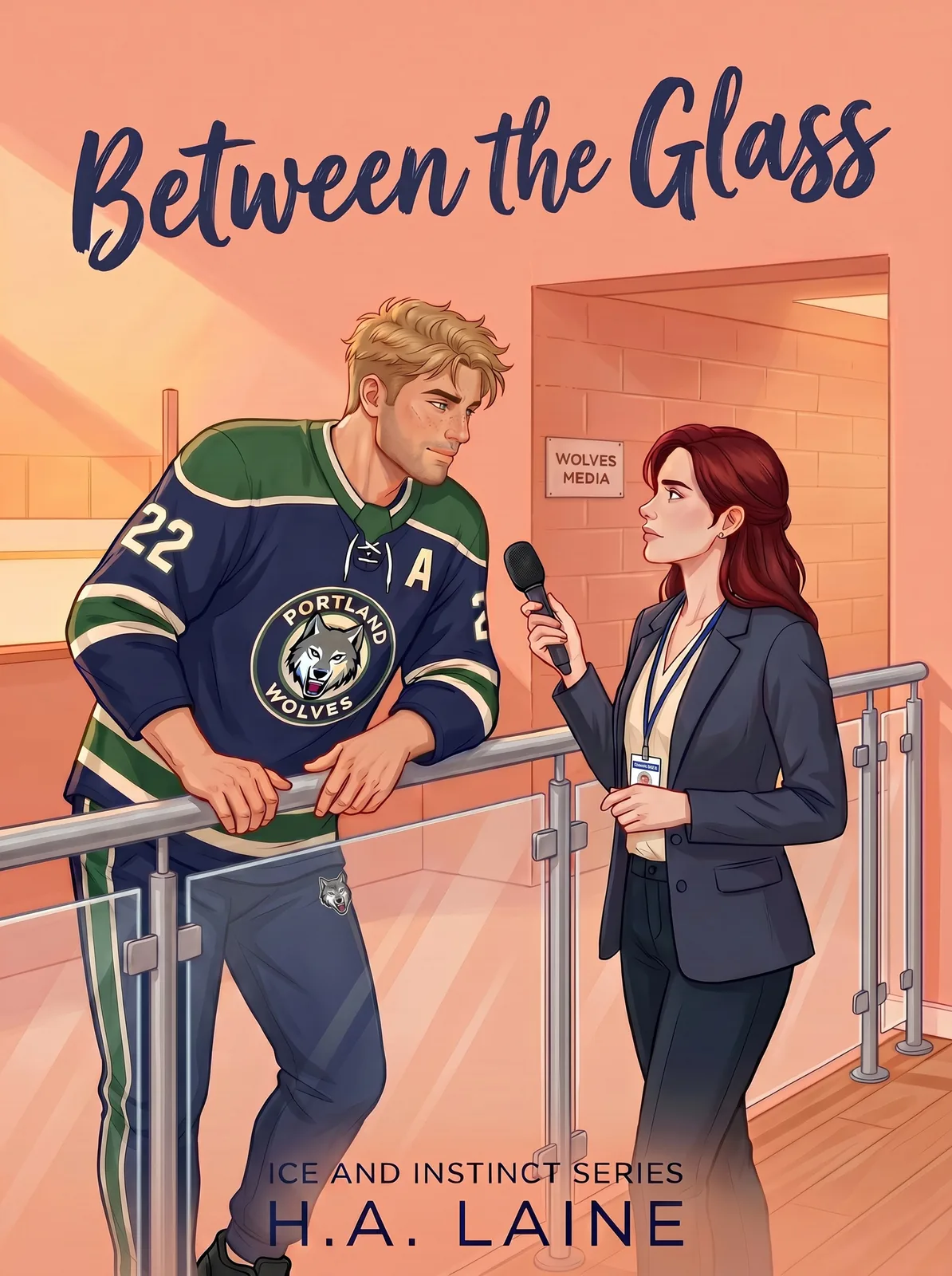
Best for
Readers who remember one phrase turning into a doorway.
Heat
Medium slow burn
Why it fits
Ben and Renee stay with you because off the record begins as procedure and becomes the only honest room they have.
Tropes
Kindle Unlimited
Read on AmazonWhat To Read Next
Read this beside The Translation Game, The Emotional Walls Trope, and Why Fake Misunderstandings Ruin Sports Romance. They are all circling the same promise: the romance works when the feeling keeps accumulating.
If you want to start inside the books instead of the essays, join the free starter library and begin with the opening chapters of Unassisted. You will know quickly whether this is the kind of romance that follows you after the light goes out.
Frequently Asked Questions
- What makes a romance stay with you after the last page?
- A romance stays with you when the relationship changes what the characters do, not only what they say they feel. The difference is consequence. Scenes leave evidence behind, private language gains meaning, and the ending feels earned because the characters had to become capable of accepting it.
- Is deep romance the same as sad romance?
- No. Deep romance does not have to be gloomy or punishing. A funny, sexy, or fast-moving romance can still feel deep if the choices matter and the emotional consequences carry forward. The test is whether you remember what changed after the scene is over.
- What is the difference between deep romance and throwaway romance?
- Throwaway romance can be enjoyable while you are reading and still disappear quickly afterward. Deep romance leaves emotional residue. You remember the phrase only the couple shares, the choice that cost them something, or the moment the happy ending finally felt possible.
- Which H.A. Laine book should I start with for emotional depth?
- Start with Unassisted if you want care under pressure, professional boundaries, a body-first love story, and clinical language turning private. Start with Between the Glass if you want public truth, banter, restraint, and two people learning what honesty costs when everyone is watching.
- Why does private language make romance more memorable?
- Private language makes a romance memorable because it gives the couple something only the reader and the characters fully understand. A phrase can begin as professional, practical, or funny, then gather emotional weight each time it returns. By the end, one ordinary line can carry the whole relationship.
- Can a light romance still stay with me?
- Yes. Light romance can absolutely stay with you when it respects the reader's attention. The book does not need to be heavy to matter. It needs choices with consequences, characters whose defenses feel real, and an ending that proves something changed beneath the surface.
- How do I know if Ice and Instinct is the right series for me?
- Try Ice and Instinct if you like hockey romance with competent adults, professional pressure, emotional restraint, open-door heat, and endings that feel paid for. The free starter library lets you sample the tone before choosing whether Unassisted or Between the Glass is your better first book.