

9 min read
Authentic Hockey Romance: The Reader Trust Guide
A reader guide to why authentic hockey romance feels trustworthy when injury, journalism, team rules, and public pressure change the love story.
Quick Answer
Authentic Hockey Romance Builds Reader Trust
Authentic hockey romance works when the details make the love story harder to fake: medical care changes touch, journalism ethics change honesty, team rules change risk, and public pressure changes what guarded people can safely want. You do not need to know hockey before reading. You only need to feel that the book respects the world it uses.
Best quick picks
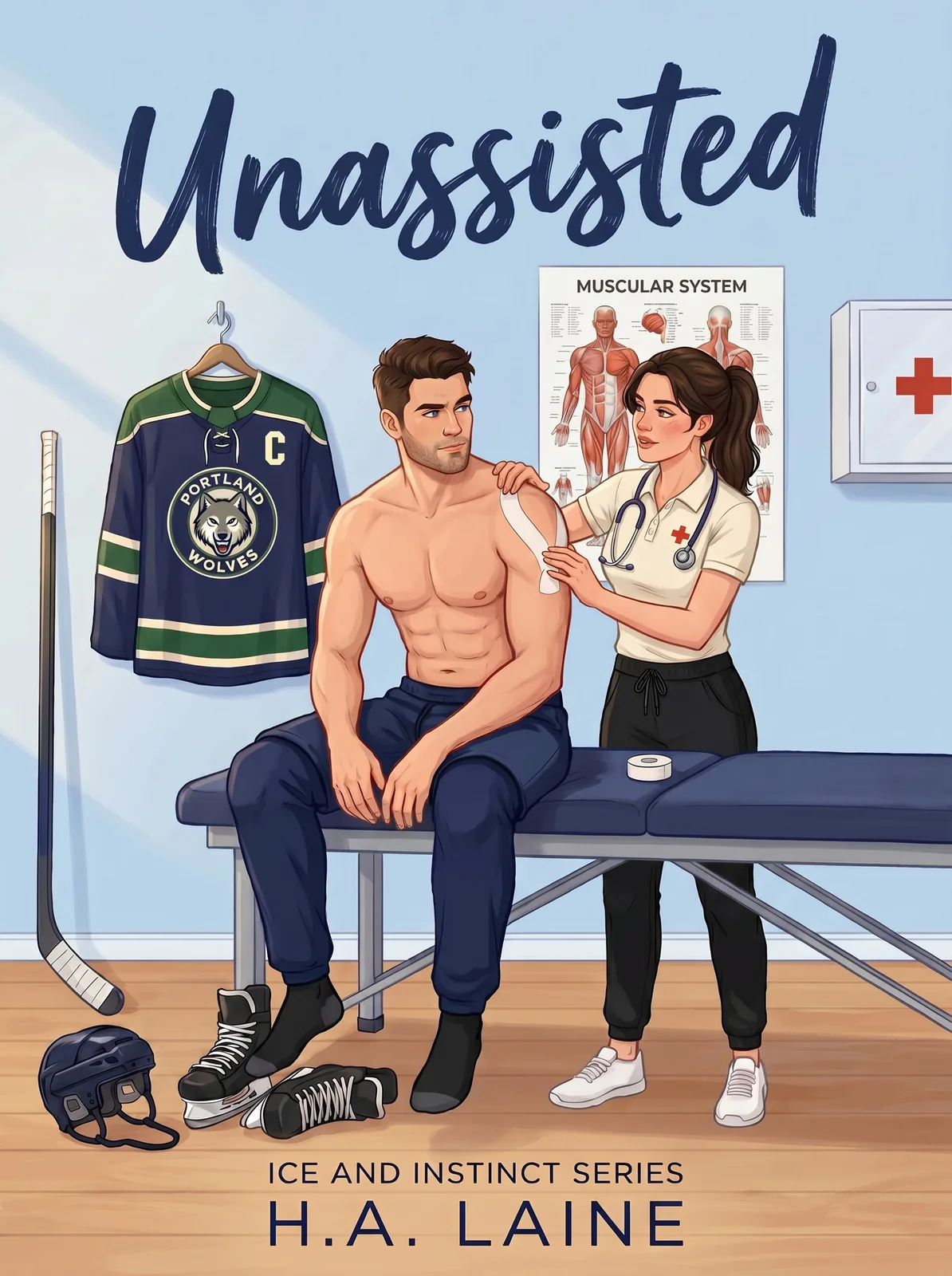
- Medical careUnassisted
- Public truthBetween the Glass
- Full pathIce and Instinct reading order
Authentic hockey romance works when details change care, truth, pressure, or consequence.
Unassisted uses medical limits to make care and forbidden proximity feel believable.
Between the Glass uses journalism ethics to make honesty dangerous and intimacy earned.
Start by trust lane: medical care, public truth, image pressure, devotion, or consequence.
Why Does Authentic Detail Matter In Hockey Romance?
Authentic hockey romance feels trustworthy when the details change what the characters can hide, risk, or admit. The point is not to make you study medicine, journalism, or NHL contracts before you can enjoy the kiss. The point is to make the care, the truth, and the public pressure feel solid enough that the romance can lean on them.
Reader Trust Test
Does This Detail Make You Care More?
The difference between research you notice and research you feel.
Reader Signal
Medical
Decorative Detail
A named injury that does not limit the character
Emotional Detail
A recovery timeline that forces care, dependency, and boundaries
Reader Signal
Journalism
Decorative Detail
A press badge mentioned once for atmosphere
Emotional Detail
A source-protection rule that makes honesty dangerous
Reader Signal
Hockey
Decorative Detail
Game schedule used as scene wallpaper
Emotional Detail
A team or contract pressure that changes what the couple can risk
Reader Signal
Romance
Decorative Detail
Facts that sit beside the love story
Emotional Detail
Details that make the kiss, choice, or confession cost more
| Reader Signal | Decorative Detail | Emotional Detail |
|---|---|---|
| Medical | A named injury that does not limit the character | A recovery timeline that forces care, dependency, and boundaries |
| Journalism | A press badge mentioned once for atmosphere | A source-protection rule that makes honesty dangerous |
| Hockey | Game schedule used as scene wallpaper | A team or contract pressure that changes what the couple can risk |
| Romance | Facts that sit beside the love story | Details that make the kiss, choice, or confession cost more |
I wrote this post because readers can usually feel the difference between a hockey romance where the rink is wallpaper and one where the world keeps pressing on the couple. You do not need to know the rulebook. You do need to believe that the author does.
The test is simple: does the detail make the love story cost more? If yes, it belongs. If no, it is decoration.
That is the promise behind the Ice and Instinct series. The medical language in Unassisted, the reporting rules in Between the Glass, the image pressure in Short Side, the family and team timing in Last Change, and the workplace consequence in Last Save all have the same job: make desire harder to dismiss.
How Does Medical Accuracy Make Unassisted Feel More Intimate?
Medical accuracy makes Unassisted more intimate because Declan's injury limits what he can pretend. A vague shoulder problem would let the book use pain whenever it needed drama. A specific shoulder injury creates repeated care, professional boundaries, recovery pressure, and a body that keeps telling the truth before Declan is ready to.
The injury framework matters because shoulder labral damage affects stability, range of motion, pain, and performance. The AAOS overview of SLAP tears explains that the shoulder labrum helps stabilize the joint, and Cleveland Clinic notes that treatment can involve a care team, rehab planning, and a recovery path that depends on the tear and the person. That kind of reality gives the romance a real container.
In the book, Elena does not need to soften herself to care for Declan. Her precision is the care.
"Anterior capsule, three degrees wide."
In a clinical room, that means joint play and stability.
In a romance, it means: I can see exactly where you are compensating.
That is why the treatment room matters. It is not just a place where they are forced to stand close. It is the one place where Declan's control has to negotiate with Elena's evidence. He can lie politely. His shoulder cannot.
For readers, that is the payoff. The body becomes an honest witness. Care becomes specific. Touch has rules before it has permission.
How Do Journalism Ethics Make Between The Glass Feel More Forbidden?
Journalism ethics make Between the Glass feel forbidden because Renee's job is not a costume. She is not a reporter so the book can have locker-room access. She is a reporter because truth, attribution, source protection, and public credibility are the things she cannot casually trade for a relationship.
The Society of Professional Journalists Code of Ethics centers principles such as seeking truth, minimizing harm, acting independently, and being accountable. In a hockey romance, that means attraction is not the only problem. The harder question is whether intimacy can survive when one person's job depends on the public record and the other person's life is constantly being interpreted by the media.
That is why "off the record" carries weight in the book.
"Off the record."
At first, it is a boundary.
Later, it becomes a room only Ben and Renee understand.
If that phrase were used loosely, the relationship would feel easier and weaker. Because it has a professional meaning first, the private meaning has to be earned. Renee cannot simply decide that love makes the rules disappear. Ben cannot simply decide that being known is safe.
For readers, that gives the romance a sharper ache. Honesty is not just emotional. It has a cost.
Why Does The Hockey World Need Rules, Contracts, And Consequences?
The hockey world needs rules because romance gets stronger when the couple cannot control every consequence. Contracts, salary caps, trades, media access, injuries, team hierarchy, and public performance all make the love story less convenient.
The NHLPA Collective Bargaining Agreement is one example of how much of professional hockey is governed by rules outside a player's feelings. The NHLPA and NHL also announced team payroll ranges through 2027-28, which is a reminder that money, roster decisions, and timing are structural pressures, not background noise.
That matters for romance because it gives the couple something bigger than mood to push against. A player can want to stay. A team can still make a business decision. A journalist can want to protect someone. A deadline can still exist. A goalie can want privacy. The public can still have opinions.
In a weaker sports romance, those details vanish when the relationship needs a softer scene. In a stronger one, the pressure stays in the room.
That is why the rink works for H.A. Laine's books. The ice is not only aesthetic. It is where bodies are judged, careers are measured, cameras are watching, and tenderness has to happen in a world built for performance.
Series Trust Shelf
Where Each Book Puts The Pressure
Use the shelf as a reader path. Each book has its own romantic pressure, but the same promise: the detail has to change the relationship.
Best for
A body that tells the truth before the hero can.
Heat
Steamy
Why it fits
Shoulder injury, rehab pressure, professional boundaries, and forced proximity.
Choose this if
You want care to begin clinically before it becomes intimate.
Tropes
Kindle Unlimited
Read on Amazon
Best for
Honesty that has to survive the public record.
Heat
Steamy
Why it fits
Source protection, off-the-record trust, athlete access, and media pressure.
Choose this if
You want the forbidden line to be ethical, not decorative.
Tropes
Kindle Unlimited
Read on Amazon
Best for
A public image problem that refuses to stay harmless.
Heat
Steamy
Why it fits
Photography, perception, team visibility, and fake dating under scrutiny.
Choose this if
You want romance where the camera changes the cost.
Tropes
Kindle Unlimited
Read on Amazon
Best for
Devotion that proves itself by staying.
Heat
High steamy
Why it fits
Single parenting, team witness, old longing, and daily choices.
Choose this if
You want the quiet pressure of showing up again and again.
Tropes
Kindle Unlimited
Read on Amazon
Best for
A romance where the clean choice is also the hardest one.
Heat
High steamy
Why it fits
Compliance pressure, reverse age gap scrutiny, workplace risk, and goalie stakes.
Choose this if
You want the finale to test desire against consequence.
Tropes
Kindle Unlimited
Read on AmazonWhich Ice And Instinct Book Shows Which Kind Of Trust?
Each Ice and Instinct book uses a different kind of professional pressure to make trust visible. If you want the most direct medical example, start with Unassisted. If you want truth and reporting ethics, start with Between the Glass. If you want the full Portland Wolves arc, read in order.
Here is the simple reader map:
| Book | Trust lane | What the detail changes | Start here if you want |
|---|---|---|---|
| Unassisted | Medical care | Injury turns competence into intimacy | Forbidden proximity and body honesty |
| Between the Glass | Public truth | Reporting ethics make honesty dangerous | Athlete and journalist tension |
| Short Side | Image pressure | Cameras and perception change the risk | Fake dating with public scrutiny |
| Last Change | Devotion | Time, parenting, and team witness test staying power | He falls first and shows up |
| Last Save | Consequence | Workplace risk and age gap scrutiny force clean choices | Forbidden workplace romance with a finale payoff |
The useful question is not "which book has the most research?" The useful question is "which kind of pressure do I want the romance to survive?"
How Can Readers Tell If Research Is Serving The Love Story?
Research is serving the love story when it changes a choice. If the detail only proves that the author looked something up, you can usually feel the drag. If the detail changes what the couple can safely say, touch, publish, hide, or risk, it becomes part of the romance.
Use this filter while reading:
- If the injury changes how someone accepts care, the medical detail is working.
- If the reporting rule changes what can be said publicly, the journalism detail is working.
- If the contract or team rule changes what the couple can risk, the hockey detail is working.
- If the detail disappears after one paragraph, it was probably atmosphere.
The best version is almost invisible. You do not stop and admire the research. You keep reading because the scene feels true.
What Are The Red Flags Of Decorative Research?
Decorative research announces itself but does not carry weight. It names an injury without limiting the character, mentions a job without consequences, or drops sports terminology without changing the scene.
The red flags are easy to spot:
| Red flag | What it feels like | Stronger version |
|---|---|---|
| Named injury, no limits | Pain appears only when drama is needed | Recovery changes proximity, timing, and pride |
| Reporter, no ethics | The job gives access but no cost | Source rules affect trust and public truth |
| Team world, no witness | The locker room exists as scenery | Teammates notice, react, protect, or judge |
| Contract, no consequence | Career pressure is mentioned once | Business reality changes the couple's choices |
This is where reader trust is won or lost. Romance readers will forgive a lot when the emotional arc is honest. They are much less forgiving when the book asks them to believe consequences that the world itself does not enforce.
Where Should You Start If You Want Researched Hockey Romance?
Start with the pressure you want to feel first. If you want care that begins as treatment and becomes intimacy, start with Unassisted. If you want public truth, reporting ethics, and private honesty, start with Between the Glass. If you want the full team build, start at Book 1 and read through the Ice and Instinct reading order.
My personal recommendation is still to begin with Unassisted, because Book 1 teaches the series language. It shows the central promise clearly: professional detail only matters when it makes love more dangerous, more precise, or more expensive.
Then Between the Glass changes the room. The intimacy is less about touch and more about what two people are allowed to know, print, protect, and keep private.
That shift is the point of the series. Every book asks a different version of the same question: what happens when the job, the body, the team, or the public story makes wanting someone cost more?
If you want to test that promise before committing, read the first three chapters free. The sample should show whether the detail makes the romance feel more precise, not more technical.
What To Read Next?
For a broader chooser by trope, heat level, and entry point, read the Hockey Romance Reader Field Guide. For the broader genre view, read The Ultimate Guide to Hockey Romance. For the character-focused companion to this post, read Why Romance Characters Feel Real. For the Book 1 version of this idea, read Author Notes: Why Unassisted Works.
The Bottom Line
Authentic hockey romance is not about proving the author did homework. It is about making the romance feel like it could not happen the same way anywhere else.
In Unassisted, the shoulder makes care unavoidable. In Between the Glass, the record makes honesty dangerous. Across Ice and Instinct, the hockey world keeps asking the same thing of guarded people: if the pressure is real, what are you willing to risk for love?
That is the kind of detail I trust as a reader. It does not stand in front of the kiss. It makes the kiss mean more.
Frequently Asked Questions
- What makes a hockey romance feel authentic?
- A hockey romance feels authentic when the sport changes the love story. Injury, contracts, team pressure, media access, and public scrutiny should affect what the couple can hide, risk, or choose.
- How does medical accuracy change a romance?
- Medical accuracy makes care feel specific. In Unassisted, Declan's shoulder injury creates limits, repeated treatment, professional boundaries, and intimacy that has to respect what his body can and cannot do.
- Why do journalism ethics make a hockey romance feel forbidden?
- Journalism ethics make the romance sharper because the reporter's credibility is part of the conflict. In Between the Glass, truth, source protection, and public record rules make private honesty cost something.
- Can I enjoy authentic hockey romance without knowing hockey?
- Yes. You do not need hockey knowledge before reading. The details should translate themselves through pressure: care after injury, team witness, public scrutiny, short career windows, and choices that cannot stay private.
- Which H.A. Laine book should I start with for researched hockey romance?
- Start with Unassisted if you want medical care, forbidden proximity, and a controlled captain under injury pressure. Start with Between the Glass if you want athlete and journalist tension, public truth, and private trust.
- How can readers tell if research is serving the love story?
- Research is serving the love story when it changes a choice. If a detail affects care, truth, timing, career risk, or trust, it belongs. If it disappears after one paragraph, it is probably decoration.
- What makes Ice and Instinct different from hockey romance where the sport is only backdrop?
- Ice and Instinct uses the hockey world as pressure. The series ties romance to injury, reporting ethics, image, parenting, team culture, contracts, workplace consequence, and the public cost of wanting someone.
Start The Trust Test
Want Hockey Romance Where The Details Cost Something?
Read the first three chapters free, then choose the Ice and Instinct book whose pressure you want first: medical care, public truth, image risk, devotion, or consequence.