

11 min read
The Ultimate Guide to Hockey Romance: Why the Rink Works
A reader-first hockey romance guide to why the rink creates pressure, which tropes work best, red flags to avoid, and where to start.
Key Takeaways
- Hockey romance works when the rink changes what the couple can risk.
- The simplest quality test: remove the rink. If nothing changes, the sport is wallpaper.
- Start with the lane you want: college banter, rivalry, forbidden care, media pressure, or found team.
- The best hockey romances make injury, team witness, and short careers feel emotionally costly.
What Is Hockey Romance?
Hockey romance is sports romance where the rink changes what the couple can risk. The best books do more than put a player on the cover. They use injury, travel, team witness, media pressure, and career timing to force two people into intimacy they would not choose in an easier room.
You do not need to know hockey to enjoy it. A strong rink-set story makes the sport emotionally legible: you understand why the body matters, why the room is watching, why a public mistake can follow someone home, and why a private act of care can feel dangerous.
What loses me fastest is a book where the game disappears until the plot needs a dramatic injury. I do not need a play-by-play. I need the sport to cost something. If the hero plays hockey but nothing about the season, the locker room, the body, or the public life changes the romance, the rink is just wallpaper.
If you want to test this kind of story before committing to a full book, read the first three chapters free. Start with the feeling first: pressure, restraint, and the moment someone who is trained to endure has to let another person close enough to notice. If you want the recommendation-first path, use the Field Guide to choose by trope, heat, and series entry point.
Why Does Hockey Romance Feel Different?
The genre feels different because the sport puts toughness and vulnerability in the same frame. A player can look armored from the glass, then come off the ice with tape marks on his wrists, blood drying under his lip, and a body he cannot fully trust by morning.
That contradiction does a lot of romantic work.
- Body risk makes care concrete. A shoulder, hand, knee, or concussion is not just plot trouble. It changes what the character can hide.
- Team witness means privacy is limited. The locker room notices moods, injuries, rituals, absences, and who starts looking at whom.
- Public performance means every mistake has a scoreboard, a replay, a comment thread, or a reporter waiting outside the room.
- Career timing compresses choices. Current professional hockey still uses a heavy regular-season rhythm, with the NHL's 2025 to 2026 schedule listed at 82 games per team. Romance does not need to invent pressure when the calendar is already doing it.
- Private softness becomes the real fantasy. The hardest public person gets one place where he does not have to keep performing.
The scene that interests me is rarely the hit itself. It is the ten minutes after, when someone competent has to accept care without turning it into a joke, an order, or a fight.
That is why hockey works so well for romance readers who like guarded adults. The sport gives you people who are rewarded for control, pain tolerance, loyalty, and silence. Love asks for almost the opposite.
It also gives romance a credible reason for repetition. The same hallway, the same trainer's table, the same postgame interview scrum, the same seat on the plane, the same ritual before a game. Repetition is where guarded characters betray themselves. One extra pause. One hand staying too long on a taped wrist. One joke that does not land because someone finally heard the hurt underneath it.
That is the part I come back to as a reader. A rink-set love story does not need to be louder than other romance. It needs to notice what pressure does to people who are used to being watched.
How Can You Tell If Hockey Is More Than Wallpaper?
The cleanest test is simple: remove the rink. If the central conflict still works, the hockey is probably decorative. If the relationship changes because of the body, the team, the season, the media, or the professional line, the sport is carrying real weight.
Depth Signals
How To Spot Hockey Romance With Real Weight
The strongest hockey romance uses the sport to make love harder, not only hotter.
Body Risk
The body creates vulnerability the character cannot charm away.
Team Witness
Private choices affect a public locker room.
Media Cost
The relationship cannot stay consequence-free.
Career Clock
Love asks the athlete to risk the self they built.
Private Care
Tenderness matters because it happens where performance usually wins.
| If The Rink Is Wallpaper | If The Rink Is Carrying The Romance |
|---|---|
| You could forget the hero plays hockey for long stretches. | The season changes what the couple can say, hide, or risk. |
| Injury appears only when the plot needs drama. | Injury reveals dependence, fear, pride, or trust. |
| The team is background noise. | The locker room creates witness, loyalty, and consequence. |
| Media attention is mentioned but does not cost anything. | Public attention makes privacy, honesty, or desire dangerous. |
| The heroine exists around the player's career. | Both leads have pressure, competence, and something to lose. |
This is also where reader taste becomes useful. Some readers want the sport to create banter and found-family warmth. Some want secrecy, professional lines, and the ache of care under rules. Some want the roughness of the ice to make tenderness feel earned.
None of those lanes is automatically better. The weak version is when the hockey can be swapped for any attractive profession and nothing breaks.
Which Hockey Romance Should You Try First?
Choose your first rink-set romance by the kind of pressure you want the love story to carry. The trope matters, but the mechanism matters more: rivalry, secrecy, public identity, injury care, competence, or team belonging.
This is why a generic best-of list can feel oddly unsatisfying. Two books can both have a hockey player, open-door heat, and a team setting, then deliver completely different emotional weather. One gives you campus warmth. One gives you public secrecy. One gives you the ache of watching a body refuse to cooperate. Pick the pressure first and the title becomes easier. For a faster chooser, the Field Guide sorts the same reader problem by trope, heat, and series path.
College banter under pressure
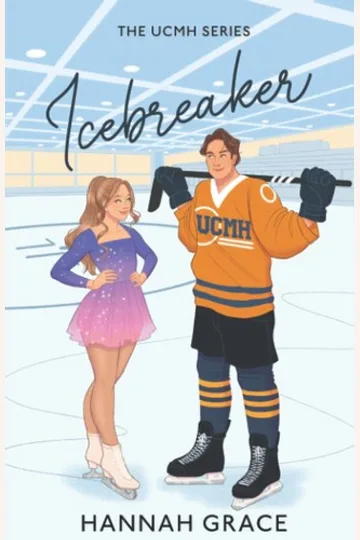
Start with Icebreaker by Hannah Grace if you want the accessible college-hockey entry point: friend-group energy, on-campus proximity, a breakout sports-romance feel, and the kind of softness that makes the hero memorable beyond the uniform.
The lane works because college hockey gives the romance structure without making the world feel closed to a non-fan. Practices, friendships, academic pressure, and team expectations create motion. The appeal is warmth under pressure, not a rulebook.
Choose this lane if you want the sport to feel social, funny, emotionally immediate, and easy to enter.
Rivalry as identity risk
Start with Heated Rivalry by Rachel Reid if you want the sport itself to make the romance dangerous. Shane and Ilya work because the public version of their relationship has to be opposition. The private version costs them something because the league, the rivalry, and the identity they have built cannot simply move aside.
This is one of the clearest examples of hockey as more than backdrop. The romance depends on the public mask.
Choose this lane if you want secrecy, longing, years of pressure, and the feeling that every private moment has a price.
Public identity and secrecy
Start with Game Changer by Rachel Reid if you want professional hockey pressure filtered through public identity, privacy, and the cost of visibility. The question is not only whether two people want each other. It is what happens when one person's public life can punish the truth.
This lane is quieter than the rivalry lane, but it is not softer. It uses the league's public gaze to make private tenderness feel fragile.
Choose this lane if you want a romance where secrecy is not a gimmick. It is the room the couple has to survive before they can ask for anything more.
Trust through sports competence
Start with The Deal by Elle Kennedy if you want the sports-romance bridge: college athletics, fake dating, tutoring, trust, and emotional safety built through repeated proof. It is not only a hockey book in the narrow sense. It is also one of the cleanest examples of why sports romance works for readers who like competence meeting vulnerability.
The strongest version of this lane is not "athlete learns feelings." It is two capable people becoming safer with each other because they keep showing up in small, observable ways.
Choose this lane if you want an approachable sports-romance classic before moving into darker professional stakes.
Injury care as forbidden intimacy
Start with Unassisted if you want the hockey to live in the body. These are my books, and the only reason they belong here is that I built the series around the exact pressure test above. Declan Rourke is a captain with a shoulder injury he has learned to minimize. Elena Marlowe is the athletic therapist whose job requires the kind of clinical proximity he cannot emotionally survive for long.
The forbidden line matters because her care is professional before it can be personal. The injury is not a plot device. It is identity pressure. Declan can perform pain. He cannot easily accept dependence.
Choose this lane if you want forbidden slow burn, medical proximity, guarded adults, and a romance where touch changes trust before anyone has language for it. Read Unassisted on Amazon.
Journalist versus player truth
Start with Between the Glass if you want public truth and private feeling to collide. Ben Kowalski is the player people mistake for easy because he is funny. Renee Lavoie is the journalist trained to verify what people say, especially when they say it beautifully.
The hockey matters because access matters. The media matters because the record matters. "Off the record" becomes romantic pressure because both characters understand exactly what the phrase costs.
Choose this lane if you want athlete and journalist boundaries, banter that stops being armor, and a romance where privacy becomes sacred because everything else wants to be public. Read Between the Glass on Amazon.
Genre Shelf
Six Ways Hockey Romance Creates Depth
These covers show the main reader lanes: college pressure, rivalry, public identity, trust through competence, injury care, and public truth.
Best for
College pressure
Heat
Open door
Why it fits
Start here for warmth, campus proximity, and a low-friction way into hockey romance.
Tropes

Best for
Rivalry as identity risk
Heat
High
Why it fits
Start here when the public version of the relationship has to be opposition.
Tropes

Best for
Public identity cost
Heat
Open door
Why it fits
Start here when secrecy, visibility, and public pressure are the emotional problem.
Tropes

Best for
Trust through competence
Heat
Open door
Why it fits
Start here when you want an approachable sports-romance bridge built on repeated proof.
Tropes

Best for
Injury care as forbidden intimacy
Heat
Steamy
Why it fits
Start here when touch is professional before it can become personal.
Tropes
Kindle Unlimited
Read on Amazon
Best for
Public truth and private feeling
Heat
Medium
Why it fits
Start here when access, ethics, and off-the-record intimacy are the pressure point.
Tropes
Kindle Unlimited
Read on AmazonWhat Are The Red Flags In Hockey Romance?
The best red flag test is not whether the author knows every technical term. It is whether the detail changes the relationship.
Watch for these warning signs:
- The sport disappears between set pieces. If games, practices, injuries, team travel, and public attention do not affect the couple, the rink is decorative.
- The heroine has no pressure of her own. A strong book gives both leads competence, risk, and something to protect.
- The injury fixes the plot too neatly. Real vulnerability should complicate control, not function as an easy sympathy button.
- The team never notices anything. Hockey is intimate because the room is crowded. A locker room that notices nothing is not doing story work.
- The conflict is only a misunderstanding. Hockey creates enough real obstacles: rules, public attention, career windows, family pressure, team loyalty, and ethics.
- Heat replaces intimacy. Open-door romance can be deeply emotional, but the scene still has to change trust, choice, or power between the characters. For a fuller reader guide to heat expectations, use the romance heat levels guide.
The strongest version makes you feel the sport even when no one is skating. You feel it in the schedule, the body, the room, the injury tape, the way someone waits before asking a question because the answer might cost too much.
There is another red flag I trust: a book that treats competence as decoration. These books are full of capable people, and competence should change the scenes. An athletic therapist should notice the body. A journalist should hear evasions.
A captain should understand room temperature before a rookie does. A goalie should read pressure before the shot. When everyone behaves like a generic attractive person in a generic room, the story has given up one of the genre's best tools.
Where Does Ice And Instinct Fit?
The Ice and Instinct series is a complete five-book series built around guarded people under professional pressure. Each book stands alone, but the team world gathers weight if you read in order.
The shared promise is not that every couple has the same trope shape. They do not. The promise is that every romance asks what happens when a capable person reaches the edge of the identity that kept them functioning. Declan reaches it through injury. Ben through public truth.
Carter through being seen past charm. Vince through quiet responsibility. Milo through a league investigation that makes his instincts both useful and dangerous.
| Book | Pressure Lane | Core Tropes | Start If |
|---|---|---|---|
| Unassisted | Injury care and professional boundaries | Forbidden romance, slow burn, forced proximity | You want a captain, an athletic therapist, and restraint that keeps tightening. |
| Between the Glass | Public truth and private feeling | Athlete and journalist, forbidden workplace, slow burn | You want banter that slowly stops being a shield. |
| Short Side | Image pressure and being seen clearly | Fake dating, age gap, golden retriever hero | You want charm with a hidden floor and a photographer heroine who notices too much. |
| Last Change | Team loyalty, single-parent stakes, quiet devotion | Single parent, he falls first, forced proximity | You want a quiet veteran who proves love through presence. |
| Last Save | League ethics, investigation, finale weight | Reverse age gap, forbidden workplace, he falls first | You want an older heroine, a goalie who reads pressure, and completed-series payoff. |
If you want the cleanest path, read them in order. If you want the fastest match, choose by pressure lane. Every book is on Amazon and Kindle Unlimited:
- Read Unassisted on Amazon
- Read Between the Glass on Amazon
- Read Short Side on Amazon
- Read Last Change on Amazon
- Read Last Save on Amazon
Start with the free starter library, use the reading order if you want the clean path, or browse the full Ice and Instinct series if you already know the rink pressure is your lane.
The Bottom Line
This genre works when the sport puts private feeling under public pressure.
The body is never only a body. It is the career, the pride, the history, the thing the player thinks he can control until someone careful notices the flinch. The team is never only a team. It is witness, family, leverage, noise, loyalty, and the room that knows when someone starts changing. The season is never only a schedule. It is a clock.
That is the version worth following: not because the rink is pretty, not because the uniform does easy work, but because the ice gives the love story a cost. And when a romance has a cost, the ending feels earned.
Related Reading
- Field Guide: choose by trope, heat, rink pressure, and series path.
- Hockey Romance Versus Other Sports Romance: how hockey compares with football, baseball, basketball, and soccer romance.
- Books Like Icebreaker: fifteen hockey romance recommendations if you came from Hannah Grace.
- Forced Proximity Romance: why proximity works only when it changes what the couple can avoid.
- Ice and Instinct Reading Order: the cleanest path through the complete Portland Wolves series.
Frequently Asked Questions
- Do I need to understand hockey to enjoy hockey romance?
- No. The best hockey romances make the sport emotionally legible. You should understand why the body, team, schedule, and public pressure matter without needing to know every rule or position.
- What makes hockey romance different from other sports romance?
- Hockey puts body risk, team witness, public performance, and a heavy season rhythm in the same frame. That gives romance natural pressure: injuries matter, privacy is limited, and care can become intimate before anyone names it.
- How can I tell if a hockey romance is using the sport well?
- Use the remove-the-rink test. If the couple could move to a generic office and the central conflict would stay the same, the hockey is probably decorative. If the sport changes what they can risk, hide, or protect, it is carrying the romance.
- Which hockey romance tropes work best?
- Forced proximity, forbidden romance, rivals, grumpy or guarded leads, he falls first, and found team all work well when the rink creates real consequence. The trope should grow from the sport, not sit on top of it.
- What are the red flags in a weak hockey romance?
- Watch for hockey that disappears between set pieces, injuries that only create easy drama, teams that never notice anything, heroines with no pressure of their own, and conflicts that could be solved by one honest conversation.
- Where should I start if I am new to hockey romance?
- Start with the pressure lane you want. Choose Icebreaker for college warmth, Heated Rivalry for rivalry and secrecy, The Deal for an approachable sports-romance bridge, or Unassisted by H.A. Laine for forbidden injury-care slow burn.
- Is the Ice and Instinct series a good hockey romance entry point?
- Yes. Ice and Instinct is written for romance readers first. The five books are interconnected standalones, all live on Amazon and Kindle Unlimited, and each book uses hockey pressure to shape the relationship rather than requiring hockey expertise.
Start The Rink Pressure
Want Hockey Romance Where The Rink Actually Matters?
Start with the free starter library, use the reading order if you want the clean path, or browse the full Ice and Instinct series if rink pressure is your lane.