

7 min read
Why Fake Misunderstandings Ruin Sports Romance
Hate fake third-act fights? See how smart hockey romance uses real pressure instead, with H.A. Laine books to start.
Quick Answer
What Makes Fake Misunderstandings Feel Cheap?
A fake misunderstanding frustrates readers when one honest sentence would solve the book. Strong sports romance does the opposite: everyone can know the truth and still face a real cost. Start with Between the Glass for journalist-and-athlete ethics, or Unassisted for injury-care boundaries and forbidden pressure.
Best quick picks
- Public truthBetween the Glass
- Injury careUnassisted
Fake misunderstandings fail when one honest sentence would solve the book.
Real sports romance pressure keeps the truth visible and still makes it cost.
Between the Glass turns journalism ethics into full-information conflict.
Unassisted turns injury care and professional boundaries into earned ache.
Why Do Fake Misunderstandings Ruin Sports Romance?
Fake misunderstandings ruin sports romance when they make smart characters act suddenly foolish just to create a breakup. The problem is not conflict. I want conflict. I want the kind that makes my stomach drop a little before I turn the page. The problem is conflict that would disappear if one adult asked one obvious question.
That is the difference I care about as a reader. A fake misunderstanding withholds a fact. Real pressure keeps every fact on the table and still makes the choice hurt.
If one honest sentence fixes the book, the book did not have a problem. It had a delay.
That is why the Ice and Instinct books lean so hard on professional pressure, public stakes, private boundaries, and the cost of telling the truth. If you read hockey romance for competent adults under real pressure, this is the version that makes me lean closer instead of bracing for the third-act shortcut.
What Does A Fake Misunderstanding Feel Like On The Page?
A fake misunderstanding feels like being asked to stop believing the characters you just spent two hundred pages trusting. One person sees half a moment, hears half a sentence, assumes the worst, and then refuses to ask the question any actual adult would ask before changing their life.
The frustration is not only that the device is unrealistic. Romance readers forgive plenty when the feeling is honest. The deeper problem is that the book breaks its own contract. It tells you these people are perceptive, wounded, competent, brave, or emotionally intelligent. Then, right when the relationship needs their best selves, the plot asks them to become less interesting.
That is when the book stops feeling tense and starts feeling rigged. I stop worrying about the couple and start waiting for the page where someone finally asks the normal question. The ache turns into impatience, which is the fastest way to lose me.
A good sports romance does not need to do that. Sports already gives the story pressure: injuries, contracts, media attention, team loyalty, reputation, public performance, and bodies that can fail at the worst possible time. The room is already hot enough.
Is There Ever A Misunderstanding Worth Reading Through?
Yes, but only when the misread reveals a wound that was already on the page. If a character has been betrayed, publicly humiliated, professionally punished, or taught that trust is dangerous, a wrong interpretation can make emotional sense. The misunderstanding should expose the defense system. It should not replace the character.
The test is simple: after the truth comes out, is there still a real problem underneath it?
If the answer is no, the misunderstanding was the whole engine. Once it clears, nothing meaningful remains. If the answer is yes, the misread was only the flare. The real fire is deeper: fear, reputation, ethics, career risk, family pressure, or a pattern of self-protection that love alone cannot magically erase.
That is the narrow version I will read through. Not because the trope gets a free pass, but because readers can feel the difference between a mistake that reveals character and a mistake that exists to stretch the page count.
What Does Real Pressure Feel Like In Sports Romance?
Real pressure in sports romance feels like truth with consequences. Everybody can know what happened. Everybody can say what they want. The problem still remains because the relationship is colliding with a career, a body, a public role, or a promise the character cannot discard without losing part of themselves.
Conflict Test
Fake Drama Or Real Pressure?
Use this as a reader filter when the third-act problem arrives.
Reader Signal
Trigger
Fake Drama
A half-heard sentence or missing fact
Real Pressure
A job, injury, public story, or ethical line
Reader Signal
Reader Position
Fake Drama
Waiting for the obvious explanation
Real Pressure
Understanding why both sides are trapped
Reader Signal
Character Cost
Fake Drama
Temporary embarrassment or hurt
Real Pressure
Career, credibility, body, team trust, or identity
Reader Signal
Resolution
Fake Drama
A clarification
Real Pressure
A changed choice with real consequence
Reader Signal
Feeling
Fake Drama
Frustration
Real Pressure
Tension with payoff
| Reader Signal | Fake Drama | Real Pressure |
|---|---|---|
| Trigger | A half-heard sentence or missing fact | A job, injury, public story, or ethical line |
| Reader Position | Waiting for the obvious explanation | Understanding why both sides are trapped |
| Character Cost | Temporary embarrassment or hurt | Career, credibility, body, team trust, or identity |
| Resolution | A clarification | A changed choice with real consequence |
| Feeling | Frustration | Tension with payoff |
The reader test is not a spreadsheet exercise. It is a feeling check: are you waiting for one explanation, or are you watching two smart people face a cost that will still be there after the truth is spoken?
I like characters who know the truth and still have to pay for it. That is where hockey romance gets sharp. The rink, press box, treatment room, road schedule, and trade deadline are not scenery. They are pressure systems.
Want to test that pressure in the series? Read the first three chapters of Unassisted free and see how the Ice and Instinct world handles guarded people, professional lines, and choices that still cost something after the truth is out.
Reader Trust
The One Honest Conversation Test
A strong sports-romance problem should survive the truth.
- 1
filter
Ask The Question
Would one honest conversation solve the central problem?
- 2
stakes
Check The Cost
Does the truth threaten a job, body, team, public role, or ethical line?
- 3
trust
Keep Both Smart
Can both characters understand the truth and still be trapped?
- 4
payoff
Demand Change
Does the ending require a choice, not just clarified information?
Why Does Between The Glass Work Without A Fake Misunderstanding?
Between the Glass passes the honest-conversation test because Ben and Renee do not need to misunderstand each other for the relationship to be difficult. Renee is a sports journalist. Ben is a player. Access, objectivity, reputation, and public truth are not decorative barriers. They are the room both characters live in.
Renee can understand Ben and still know that dating a source changes how people read her work. Ben can understand Renee and still know that being known by someone with a notebook is not simple. Their tension is not "if only they talked." They do talk. That is the point. The more honest they become, the more expensive the truth gets.
That is the kind of conflict I trust as a reader. It lets both characters keep their intelligence. Renee does not have to become gullible. Ben does not have to become cruel. The romance asks a better question: what happens when the person who sees you clearly is also the person whose job makes seeing dangerous?
The off-the-record language matters because it gives them a private room inside a public world. Not a trick. A pressure valve.
Why Does Unassisted Work Without A Fake Misunderstanding?
Unassisted uses a different pressure system. Declan is injured, guarded, and used to controlling the room. Elena is the athletic therapist responsible for reading what his body refuses to confess. The conflict is not built on a missing fact. Both of them understand the professional line. Both understand why crossing it would cost something.
That makes the closeness sharper. Treatment requires repetition, proximity, and touch, but every moment has an ethical shadow. Elena cannot pretend she is only noticing the shoulder. Declan cannot pretend the shoulder is the only thing being exposed. The pressure is quieter than a press scrum, but it sits closer to the skin.
This is why I keep coming back to professional pressure in romance. It lets desire grow inside a real boundary instead of a fake silence. If the only thing keeping two people apart is an easily corrected assumption, the story feels thin. If the thing keeping them apart is a role, a duty, a body, a career, and a line they both respect, the ache has weight.
That is the promise I want the series to make: nobody has to become stupid for the romance to get hard.
The Reader Test: Would One Honest Conversation Fix This?
The quickest way to judge a romance conflict is to ask whether one honest conversation would fix the central problem. If yes, the book may still be fun, but the conflict is probably running on delay. If no, you are in better territory.
Look for four signs:
- The stakes exist outside the couple's feelings.
- Both characters can be right and still lose something.
- The truth makes the choice harder, not easier.
- The resolution requires changed behavior, not just clarified information.
This is why real hockey romance pressure feels satisfying. It respects your time. It lets you enjoy the ache without silently begging the characters to ask a normal follow-up question.
A good third-act problem should not make you want to climb into the book and explain the plot to everyone. It should make you wonder what you would sacrifice if you were standing in the same room.
Where Should You Start If You Want Smart Sports Romance?
Start with the kind of pressure you want to feel first.
Choose Between the Glass if you want athlete-and-journalist tension where truth, access, and reputation make the romance risky. Choose Unassisted if you want forbidden injury-care pressure where clinical precision turns into intimacy. If you want the cleanest first handshake with the series, start with Unassisted and let the professional line do its damage first.
If you are not ready to choose yet, the lowest-friction path is the sample library. Read the first three chapters free and see whether this kind of honest-pressure romance is your lane.
Start Here
Two H.A. Laine Books That Keep The Truth Visible
Both books make the characters communicate, then let professional pressure keep costing them.

Best for
Full-information public pressure.
Heat
Medium slow burn
Why it fits
Ben and Renee know the problem. The conflict gets harder because ethics and desire both matter.
Tropes
Kindle Unlimited
Read on Amazon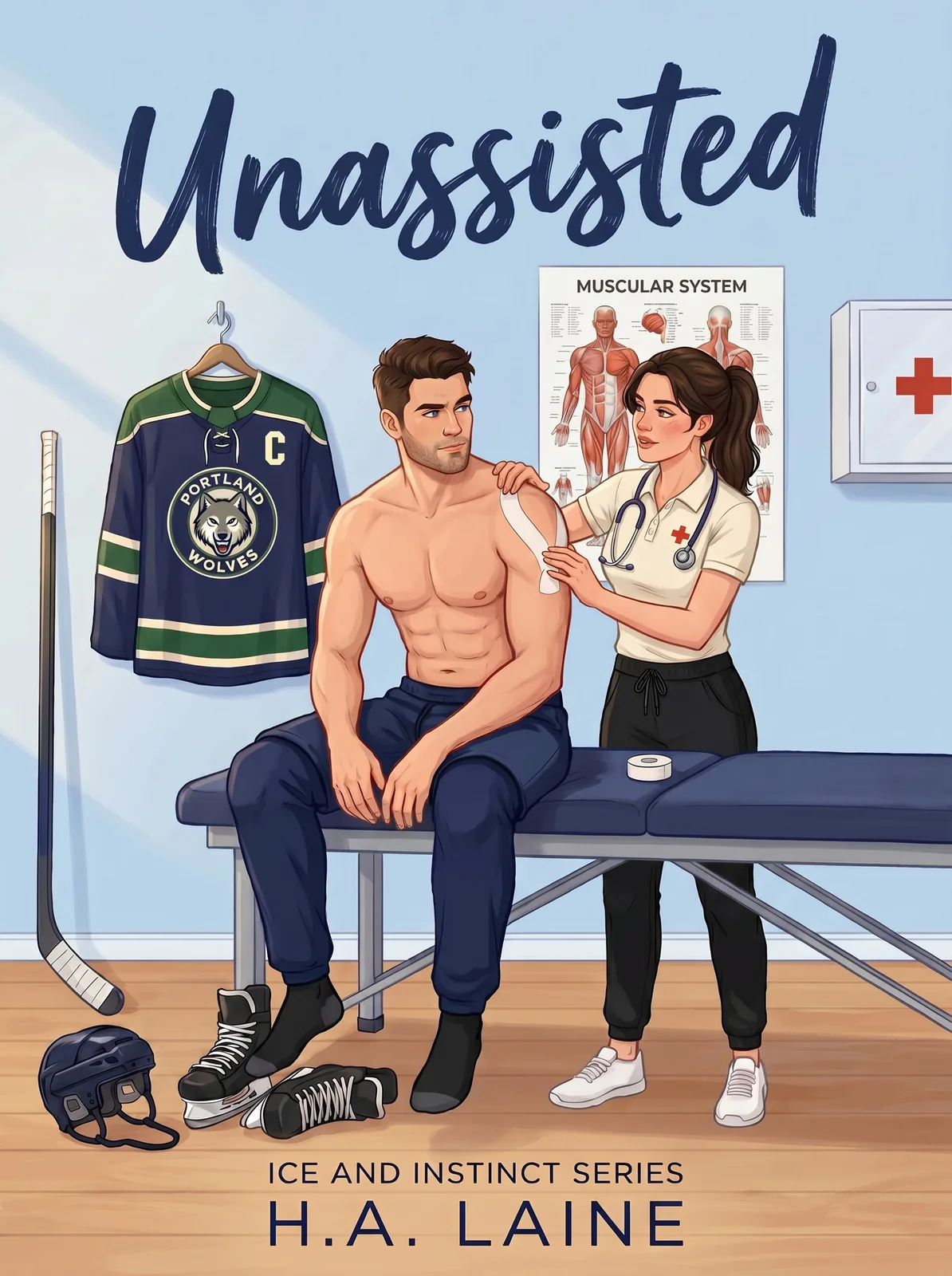
Best for
Forbidden care under pressure.
Heat
High steamy slow burn
Why it fits
Declan and Elena understand the line between them. That is what makes crossing it costly.
Tropes
Kindle Unlimited
Read on AmazonWhat To Read Next
If this is the kind of romance logic you want more of, read Why Forbidden Romance Works, The Translation Game, and Deep Romance vs. Throwaway Romance. They all circle the same reader promise from different angles: love feels better when the obstacle is real enough to deserve the ending.
Frequently Asked Questions
- Why do fake misunderstandings feel so frustrating in romance?
- They make smart characters act suddenly foolish just to create a breakup. Readers usually feel the difference between a believable wound and a plot delay that would vanish if one person asked one honest question. The frustration comes from losing trust in people the book already taught you to believe.
- What is the difference between a misunderstanding and real conflict?
- A misunderstanding depends on a missing fact. Real conflict survives the truth. In strong sports romance, both people can know what happened and still face career risk, public pressure, body risk, or professional consequence. The tension comes from what the truth costs, not from delaying the truth.
- Can a misunderstanding ever work in sports romance?
- Yes, but only when the misread reveals an established wound and there is still a real problem underneath it. If the truth comes out and nothing meaningful remains, the conflict was too thin. A good misread exposes fear, history, or self-protection; it does not replace the actual obstacle.
- Which H.A. Laine book best shows full-information conflict?
- Between the Glass is the cleanest example because Ben and Renee understand the athlete-and-journalist problem from the start. The conflict keeps getting harder because access, ethics, reputation, and desire all matter. They do talk; the pressure is that honesty makes the cost clearer.
- How does Unassisted avoid fake misunderstanding drama?
- Unassisted uses injury care, professional boundaries, and forbidden proximity. Declan and Elena understand the line between them; the tension comes from respecting that line while feeling it change. The problem is not confusion. It is closeness, duty, pain, and the risk of wanting what the role forbids.
- How do I spot real pressure in a sports romance?
- Ask whether one honest conversation would fix the main problem. If not, look for stakes outside the couple's feelings: a job, body, team, public role, ethical line, or future that has to change. Real pressure makes the truth harder to live with, not harder to discover.
- What is a good hockey romance without fake misunderstanding drama?
- Look for hockey romance where the rink creates real consequence: injury care, team witness, media pressure, contract risk, or a professional line that still matters after everyone knows the truth. Unassisted and Between the Glass both use that kind of pressure.
- Where should I start if I want smart sports romance without fake fights?
- Start with Unassisted if you want the cleanest first entry into Ice and Instinct: injury care, forced proximity, professional boundaries, and a heroine who keeps the hero honest. Choose Between the Glass next if you want athlete-and-journalist tension where public truth and private desire collide.