

8 min read
Romance Where Both Characters Are Guarded: 8 Mutual-Armor Books
Romance where both characters are guarded, with 8 books chosen by mutual armor, emotional restraint, and earned vulnerability.
Quick Answer
Best Romance Where Both Characters Are Guarded
The best romance where both characters are guarded gives both leads real armor, not one wounded person and one rescuer. Start with Unassisted for clinical control and forbidden hockey pressure, Between the Glass for public skepticism, The Flatshare for private distance, The Love Hypothesis for academic caution, or Beach Read for grief and creative self-protection.
Best quick picks
- Clinical controlUnassisted
- Public skepticismBetween the Glass
- Private distanceThe Flatshare
Dual-guarded romance works when both leads have real armor, not one rescuer.
Start with Unassisted, Between the Glass, The Flatshare, The Love Hypothesis, or Beach Read.
Choose by defense style: clinical control, public skepticism, private distance, or grief.
Unassisted and Between the Glass belong because professional restraint drives the ache.
What If Neither Person Is The Easy One?
Romance where both characters are guarded works best when neither lead is waiting around to be rescued into openness. Both people have armor. Both have reasons. The pleasure is watching two defense systems recognize each other, then choose the risk anyway.
If you want the fastest answer, start with Unassisted for clinical restraint and forbidden hockey pressure, Between the Glass for public skepticism and private attraction, The Flatshare for two closed-off people learning each other by inches, The Love Hypothesis for academic caution under fake-dating pressure, or Beach Read for grief, cynicism, and creative vulnerability.
I am picky about this trope because it gets mislabeled so easily. A cold hero and a patient heroine is not dual-guarded romance. A prickly heroine and a man who simply waits her out is not enough either. The good version has reciprocity. She is protected. He is protected. The story has to make trust cost both of them something.
That is why I do not treat this as a mood word. I treat it as a reader promise. If a book says both characters are guarded, I want the armor to shape the scenes, not decorate the blurb.
Five Books Where The Armor Is Real On Both Sides
This is the quick comparison surface for readers who came here to choose a book, not read a theory essay first. I ranked the first five by how clearly both leads protect themselves, how visible the cost is, and whether the romance makes vulnerability feel earned.
| Book | Defense Style | Heat | Best For | Start Here |
|---|---|---|---|---|
| Unassisted by H.A. Laine | Clinical control plus injured-athlete stoicism | High steamy | Forbidden hockey romance with professional boundaries | Amazon |
| Between the Glass by H.A. Laine | Public skepticism plus practiced charm | Medium slow burn | Athlete and journalist pressure | Amazon |
| The Flatshare by Beth O'Leary | Private distance plus recovery from emotional manipulation | Warm | Domestic intimacy without immediate access | Amazon |
| The Love Hypothesis by Ali Hazelwood | Academic caution plus harsh professional reputation | Medium | Fake dating, STEM competence, careful feelings | Amazon |
| Beach Read by Emily Henry | Grief, cynicism, and creative self-protection | Medium | Readers who want ache with wit | Amazon |
The table is intentionally compact. The book notes below do the taste work: why each one belongs, what kind of guardedness it offers, and who should pick it first.
Two Hockey Romances Where The Line Is Mutual
The two H.A. Laine picks belong here because they are not using guardedness as a personality sticker. Both books put the defense inside the job, the room, and the way the characters read each other.
Unassisted by H.A. Laine
This is my book, and I am saying that plainly because it should earn its place by the same rule as every outside recommendation here. Unassisted belongs in the lead shelf because Declan and Elena are not a grumpy-sunshine couple wearing different labels.
Declan's stoicism is tied to injury, public identity, and the terror of losing the body that made him useful. Elena's restraint is clinical, ethical, and deeply practiced.
The romance works because neither of them gets to be the emotionally easy one. Rehab puts them in daily contact, but it also gives both of them a professional reason to deny what is happening. Every touch has a second meaning. Every instruction can pretend to be medical. If you like guarded romance where competence becomes the language of longing, start with Unassisted or read it on Amazon.
Between the Glass by H.A. Laine
Between the Glass is my second pick from Ice and Instinct because the guardedness is public before it is private. Ben lives inside performance. Renee lives inside observation. He knows how to charm a room. She knows how to distrust a room, especially when access, reputation, and professional ethics are involved.
That makes the romance sharper than simple attraction. Renee cannot afford to be gullible. Ben cannot afford to be fully seen. The love story has to pass through suspicion, media pressure, and the question of whether private intimacy can survive public truth.
Choose this if you want a slower, cleaner ache than Unassisted, with less heat and more restraint around what people owe each other when the story is already watching. com/dp/B0GRRC3NPY/).
Lead Shelf
Five Mutual-Armor Romance Lanes
Each lead pick earns the label because both characters have a defense pattern the romance has to expose, not because one person is simply grumpy.

Best for
Clinical control under forbidden hockey pressure.
Heat
High steamy
Why it fits
Professional ethics, injury vulnerability, and mutual restraint.
Choose this if
You want competence to become the love language before anyone admits feeling anything.
Tropes
Kindle Unlimited
Read on Amazon
Best for
Public skepticism and media-pressure romance.
Heat
Medium slow burn
Why it fits
Professional access, image control, and a slow trust problem.
Choose this if
You want the guardedness to come from being watched, quoted, and judged.
Tropes
Kindle Unlimited
Read on Amazon
Best for
Private distance becoming trust.
Heat
Warm
Why it fits
Domestic intimacy, notes, caution, and recovery.
Choose this if
You want softness with real boundaries underneath it.
Tropes

Best for
Academic caution with fake-dating pressure.
Heat
Medium
Why it fits
Professional stakes, public performance, and careful trust.
Choose this if
You want a familiar romcom engine with quieter guardedness underneath.
Tropes
Best for
Grief, wit, and creative self-protection.
Heat
Medium
Why it fits
Writer tension, emotional skepticism, and earned hope.
Choose this if
You want the guardedness to feel messy, adult, and a little bruised.
Tropes
The Three External Picks That Earn The Label
These three are not filler. They each solve the dual-guarded promise from a different angle: domestic distance, professional caution, and grief that makes romance feel dangerous.
The Flatshare by Beth O'Leary
The Flatshare is one of the cleanest examples because the structure itself keeps the characters apart. Tiffy and Leon share a flat and a bed, but not at the same time. Their early intimacy happens through notes, logistics, and the strange safety of being honest without standing face to face.
That distance matters. Leon's quietness is not just shyness. Tiffy's brightness is not uncomplicated openness. The book understands that someone can sound vivid and still be guarded, especially after a relationship has taught her to distrust her own instincts. Choose this if you want warmth without instant access, and tenderness that arrives through tiny domestic proof.
The Love Hypothesis by Ali Hazelwood
Olive and Adam look like a familiar pairing at first: bright anxious heroine, severe academic hero. The reason it belongs here is that both characters are defended. Olive performs okay-ness because vulnerability would expose how much she wants. Adam's reputation does defensive work before he even enters a scene.
The fake-dating setup forces them into a public arrangement where both have to manage what people think while privately becoming less capable of pretending. Choose this if you want STEM competence, carefully contained feelings, and a romance where the guarded heroine is not treated as a puzzle for the hero to solve.
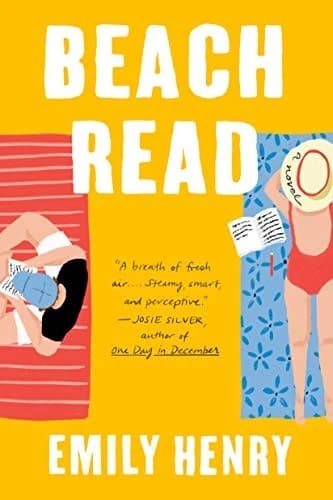
Beach Read by Emily Henry
Beach Read gives you two writers who have made art out of self-protection. January's optimism has been damaged by grief and betrayal. Gus's cynicism is not a brand, it is scar tissue. Their challenge to swap genres is funny on the surface, but underneath it asks both of them to write toward what they have been avoiding.
I like this pick for readers who want ache with wit. The guardedness is not neat. It leaks into work, taste, attraction, and the stories they tell about whether happy endings are still honest. Choose this when you want emotional armor with a creative edge.
Choose The Defense You Want To Watch Break
The best next read depends on the kind of armor you want on the page. Some readers want competence. Some want public skepticism. Some want a romance where the characters are so practiced at hiding that the first honest sentence feels louder than a kiss.
Reader Lanes
Pick The Kind Of Armor You Want
The right guarded romance depends on what the characters use to stay safe before trust becomes more dangerous than distance.
Clinical Control
Unassisted
Public Skepticism
Between the Glass
Private Distance
The Flatshare
Academic Caution
The Love Hypothesis
Grief And Cynicism
Beach Read
Structured Intimacy
The Kiss Quotient
Rivalry As Armor
The Hating Game
Friendship History
People We Meet on Vacation
Use the chooser below as a lane test, then follow the book notes that match the pressure you want.
Three More Guarded Reads After The First Shelf
These support picks widen the shelf without pretending every recommendation needs the same depth. Use them once you know the defense style you like most.
The Kiss Quotient by Helen Hoang
Choose The Kiss Quotient if you want a heroine whose control is not coldness. Stella's guardedness comes through structure, planning, and the desire to understand intimacy without losing herself inside it. Michael has his own defenses around family, work, money, and what he believes he is allowed to want.
This is the higher-heat support pick. It belongs because both leads have to renegotiate safety, not because one simply teaches the other how to feel.
The Hating Game by Sally Thorne
Choose The Hating Game if you want rivalry as armor. Lucy and Joshua have built an entire office language out of antagonism, competition, and ritualized hostility. The game protects both of them because admitting attraction would collapse the rules they use to survive the workday.
It is a lighter, sharper read than some of the others here, but it still earns the support slot because both characters participate in the defense system.
People We Meet on Vacation by Emily Henry
Choose People We Meet on Vacation if you want friendship history as the locked door. Poppy and Alex are not guarded in the same way, but both have spent years managing the gap between what they feel and what they are willing to risk saying.
This pick is softer than Beach Read, but it works for readers who like the ache of two people knowing each other almost too well and still hiding the one thing that would change everything.
Why Mutual Armor Feels Different From Being Rescued
Dual-guarded romance hits differently because the happy ending is not one person saving the other from loneliness. It is two people choosing exposure at the same time, with no guarantee that the other person will meet them there.
That is the whole charge of the trope. Nobody gets to say, "I was always open, you just had to catch up." Nobody gets to carry the moral high ground of being easier to love. The trust has to be mutual or the story collapses.
When this works, the smallest scene can feel huge. A text answered honestly. A door left unlocked. A hand not pulled away. A professional sentence that carries too much feeling underneath it. I love those scenes because they make romance feel earned at the molecular level. Not bigger. Truer.
Related Reading
- The Emotional Walls Trope: Romance About People Who Forgot How to Let Someone In
- The Psychology of Grumpy Sunshine: Why Professional Competence Is the Ultimate Armor
- What Makes A Romance Stay With You Long After The Last Page
- Best Forbidden Romance Books Where The Rule Actually Matters
What Mutual Armor Costs, And Why It Is Worth It
If you came here because you are tired of one guarded character and one endlessly patient rescuer, start with the books where both people have something to lose. That is where the tension gets honest.
For the Ice and Instinct lane, begin with Unassisted if you want forbidden therapist-and-captain pressure, or Between the Glass if you want athlete-and-journalist restraint. Both are available on Amazon and Kindle Unlimited. If you want the free starter library first, join here and sample the world before choosing your first guarded couple.
Frequently Asked Questions
- What is romance where both characters are guarded?
- Romance where both characters are guarded features two leads with real emotional defenses. Neither person is simply the rescuer or the open one. The romance works because both characters have to choose vulnerability.
- How is dual-guarded romance different from grumpy sunshine?
- In grumpy sunshine romance, one character often brings warmth that helps the guarded character soften. In dual-guarded romance, both leads are defended, so trust has to be mutual rather than one person doing all the emotional labor.
- What should I read if I want both characters to be guarded?
- Start with Unassisted, Between the Glass, The Flatshare, The Love Hypothesis, or Beach Read. Each one gives both leads a visible defense pattern and makes trust feel earned rather than automatic.
- Why does Unassisted belong on this list?
- Unassisted belongs because both Declan and Elena use competence as armor. Declan hides behind stoic athlete control, while Elena hides behind clinical precision and professional ethics. The romance makes both defenses cost something.
- Why does Between the Glass belong on this list?
- Between the Glass belongs because Ben and Renee are both guarded in public-facing ways. He performs ease for the room. She distrusts access, charm, and easy answers because her work depends on truth.
- Are guarded romance books usually slow burn?
- Many guarded romance books lean slow burn because the emotional payoff depends on trust. They can still have heat, but the best versions make intimacy feel risky before it feels safe.
- Can a romcom count as dual-guarded romance?
- Yes, if both leads are genuinely protected beneath the humor. The Love Hypothesis and The Flatshare both use lighter surfaces while still giving each character a real reason to keep emotional distance.
Reader Path
Want This Emotional Frequency In Hockey Romance?
Start Ice and Instinct for forbidden slow burn, guarded characters, professional stakes, and books that reward the wait.